
AI labels tank sales, CTV crushes installs, Meta on trial
AI labels hurt sales by 29%, Crumbl's CTV campaign drives 16K app installs with 213% over-target, and why advertising next to AI content might actually boost your brand. Your weekly marketing intel.
 Carla17 April 20267 min read
When “AI-Designed” Kills Your Conversion Rate
Here’s a plot twist nobody asked for: slapping “AI-designed” on your product packaging might tank sales by up to 29%.
Research from Shanghai University of Finance and Economics just dropped some uncomfortable truths for the AI-everything crowd. Across nine experiments testing physical products: perfumes, snacks, furniture, consumers consistently showed lower purchase intent when products were labeled as AI-designed versus human-designed. We’re talking double-digit drops in willingness to buy.
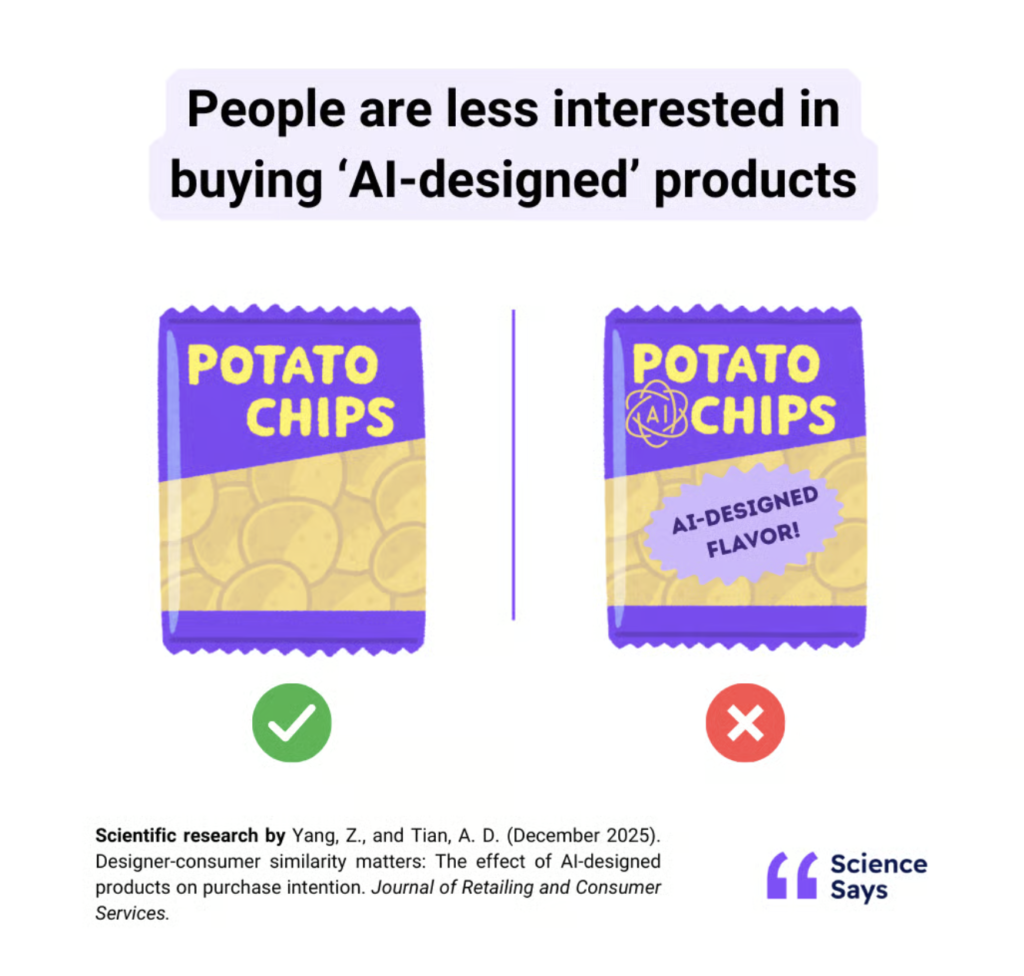
The psychology is brutally simple. We buy from people we identify with. When AI fully designs something, that human connection evaporates. There’s no designer to relate to, no shared values to connect with, just algorithms optimizing for aesthetics we can’t emotionally invest in.
But here’s where it gets interesting: when brands framed it as human-AI collaboration, purchase intent actually increased compared to purely human-designed products. The lesson isn’t “hide your AI usage.” It’s “lead with the human.”
One fascinating exception: rental products. When consumers rent instead of buy, AI-designed products perform better. Why? Because renting is transactional, not identity-driven. You care about utility, not whether the camping chair designer shares your worldview.
For marketers, the implication is clear: if AI touches your product development, make the human involvement explicit. Frame AI as the technical assistant, not the creative lead. Your conversion rate will thank you.
Crumbl Cracks the CTV Code for App Downloads 🍪
Connected TV just proved it’s not just for brand awareness anymore. Cookie empire Crumbl ran their first CTV campaign and blew past their app download targets by 213%, hitting over 16,000 installs in seven weeks.

The campaign, run with Samsung Ads, used machine learning to identify high-intent users across Samsung TV Plus and other screen-first environments. Within the first week alone, those new users generated over $20,000 in attributed revenue and delivered a 32% return on ad spend.
This matters because mobile apps drive over 50% of Crumbl’s sales, according to their paid media team. The brand needed performance, not vanity metrics, and CTV delivered. Samsung’s CTV-to-Mobile solution used cross-device signals to find lookalike audiences who were likely to install and convert, not just watch and forget.
The timing couldn’t be better. As social platforms face mounting scrutiny over user addiction and safety, CTV offers a cleaner environment with actual living room attention. No user-generated chaos, no moderation nightmares, just premium inventory where your cookie ad won’t accidentally appear next to something requiring a legal team review.
For direct-to-consumer brands relying on mobile apps, the playbook is shifting. CTV isn’t just top-of-funnel anymore, it’s a performance channel with trackable attribution and transparent measurement. If you’re still treating it like digital billboards, you’re leaving installs on the table.
Not All AI Content Is Toxic to Your Brand
Plot twist number two: advertising next to AI-generated content might not destroy your brand. In fact, it could help.
New research from OM Media Trials and Zefr surveyed nearly 5,000 people and found that ads shown alongside AI-generated satire, art, or youth-focused content actually boosted brand perception. Respondents described these brands as “refreshing” and “innovative.”
The data gets even weirder: when AI content was clearly labeled as algorithmically generated, 41% of respondents improved their opinion of the adjacent brands. Transparency, it turns out, is your friend.
But before you pivot your entire media strategy, there are legitimate risks. Ads shown next to AI spam or misinformation about public figures tanked brand sentiment, especially for financial services companies. The quality and context of the AI content matters as much as the disclosure.
This research arrives at a critical moment. Gartner estimates 90% of internet content will be AI-generated by 2030. That’s not hyperbole, it’s a mathematical inevitability as production costs drop to near-zero. Marketers who wait for a “clean” internet to return are waiting for something that’s never coming back.
The strategic takeaway? Stop treating all AI content as brand-unsafe by default. Invest in contextual intelligence that distinguishes between useful, well-labeled AI content and low-quality spam. Because in two years, avoiding AI environments entirely might mean avoiding the internet.
Ready to rethink your digital strategy? At Donutz Digital, we help brands navigate the messy reality of modern marketing: AI, CTV, social, and everything in between. Let’s talk.
Ready to grow your digital marketing?
Get a free audit from our experts — no commitment.