Another week, another batch of seismic shifts in the digital marketing world. From Meta doubling down on AI-powered commerce to major platforms hemorrhaging engagement, the landscape is evolving faster than most brands can keep up. Let’s break down what happened and what it means for your 2026 strategy.
Meta’s AI Shopping Assistant: Commerce Meets Conversation
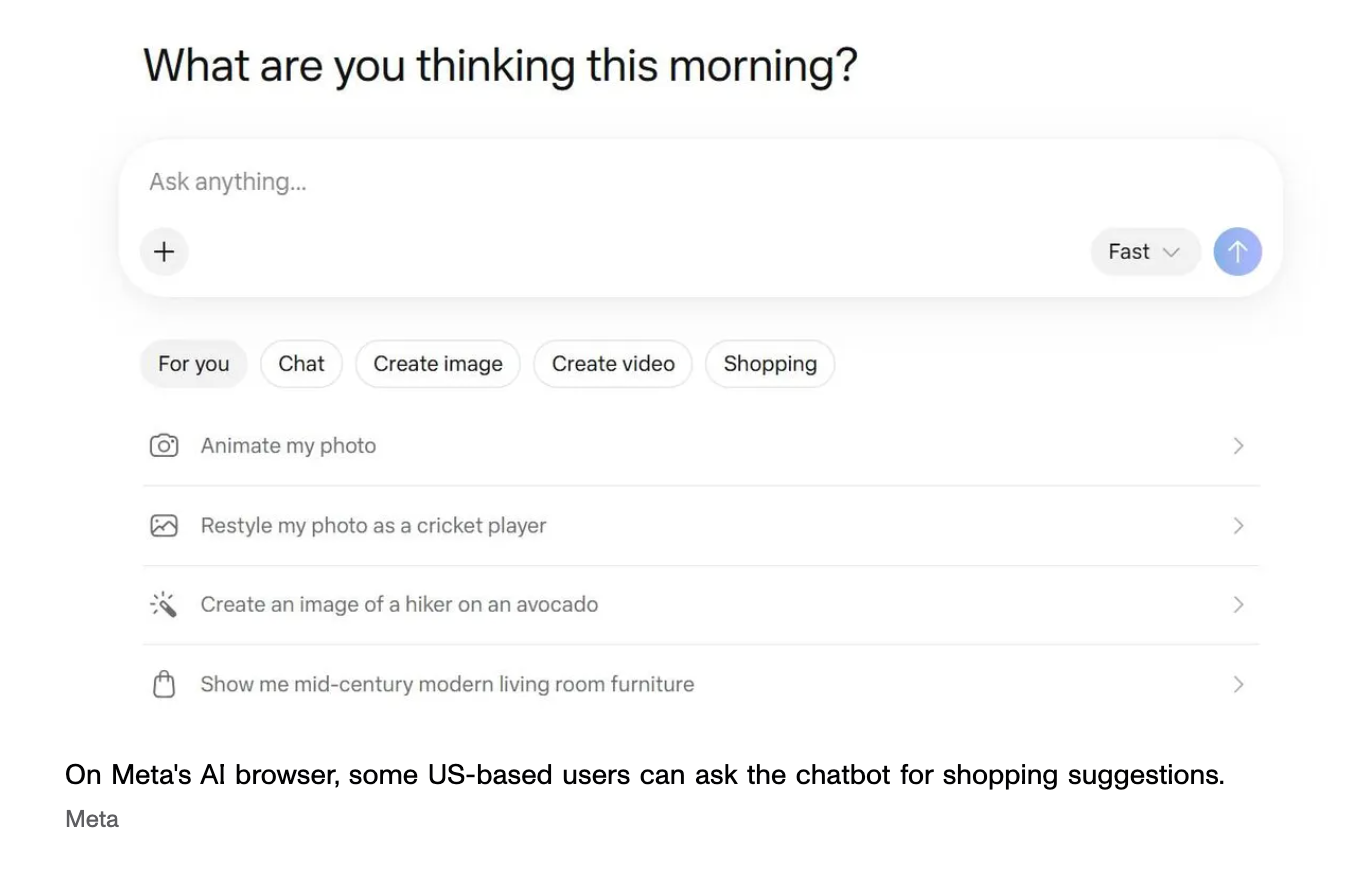
Meta is betting big on AI-powered commerce with a new shopping assistant rolling out across Facebook and Instagram. Unlike previous half-baked AI experiments, this one’s designed to understand context, recommend products based on actual conversations, and guide users from “just browsing” to checkout without leaving the app.
The assistant leverages Meta’s Llama models to analyze user queries in natural language. Think “I need a gift for my brother who loves hiking” rather than typing “men’s hiking gear” into a search bar. It then surfaces relevant products from Meta’s vast catalog of sellers, complete with reviews, pricing comparisons, and personalized suggestions based on your past behavior and stated preferences.
What makes this different from traditional product recommendation engines is the conversational layer. Users can ask follow-up questions, request alternatives, or specify constraints like budget or delivery time. The AI remembers context within a session, so you’re not starting from scratch every time you refine your search.
For brands and retailers, this represents a fundamental shift in how discovery happens on social platforms. Instead of relying purely on paid ads or algorithmic feed placement, products can surface organically through conversational queries. Meta is positioning this as a win-win: shoppers get better recommendations without ad fatigue, while advertisers gain a new, intent-driven channel that captures users further down the funnel.
Early testing suggests the tool performs particularly well for gift shopping, niche product categories, and scenarios where users know what problem they’re solving but not which specific product solves it. Meta claims conversion rates are notably higher compared to traditional product tags and shoppable posts.
The rollout is gradual, starting with select U.S. markets before expanding globally. Meta has also confirmed the assistant will integrate with Shops, making it easier for small businesses to tap into AI-driven commerce without building custom tech stacks.
The Great Engagement Collapse: Instagram, LinkedIn & Threads All Down
The big three of professional and visual social media all reported declining engagement rates in 2025, and the culprit isn’t just algorithm fatigue. It’s platform oversaturation and AI-generated content flooding feeds.
According to recent data, Instagram engagement dropped by 12% year-over-year, LinkedIn fell 8%, and Threads (despite being Meta’s newest bet) saw a 15% decline compared to its 2024 peak. The metrics tracked include likes, comments, shares, and time spent per session, painting a picture of users who are present but increasingly passive.
Several factors are driving this trend. First, the sheer volume of content has exploded, but user attention hasn’t scaled to match. Brands are posting more frequently, influencers are doubling down on multi-platform strategies, and now AI tools are enabling bulk content creation at unprecedented speed. The result? Feeds packed with content that all starts to look and sound the same.
Second, users are growing wary of performative engagement. On LinkedIn especially, the “like and comment for visibility” culture has reached a tipping point, with many professionals reporting feed fatigue and skepticism toward overly polished thought leadership posts. Authenticity, it seems, has become so commodified that users are tuning out.
Instagram faces a different challenge: competition from TikTok and YouTube Shorts has trained users to expect hyper-engaging short-form video, raising the bar for what counts as “scroll-stopping” content. Static posts and carousels (once Instagram staples) are seeing sharp declines in reach and interaction.
Threads, meanwhile, is caught in an identity crisis. Positioned as Twitter’s alternative, it’s struggling to foster the kind of real-time, high-energy conversations that defined early Twitter. Without robust search, trending topics, or a critical mass of news-driven accounts, engagement remains sporadic.
For marketers, this data reinforces a hard truth: posting more doesn’t equal better results. The platforms that win in 2026 will be those that prioritize quality, community-building, and genuine interaction over vanity metrics. If your strategy still revolves around daily posts and engagement pods, it’s time to rethink.
OpenAI’s Ad Platform Launches Without Basic Attribution Tools
OpenAI quietly launched an advertising platform for ChatGPT earlier this year, promising brands a chance to reach millions of engaged users through sponsored content and contextual placements. There’s just one glaring problem: the platform offers almost no attribution or performance tracking.
Advertisers running campaigns on ChatGPT can see impressions and clicks, but that’s where the data trail ends. There’s no conversion tracking, no audience segmentation, no A/B testing framework, and (most baffling) no integration with third-party analytics tools like Google Analytics or Meta’s Pixel. Brands are essentially flying blind, unable to tie ad spend to downstream actions like sign-ups, purchases, or even website visits.
This is a massive gap for an ad product launching in 2026, especially one targeting performance-driven marketers who expect granular ROI measurement. OpenAI’s explanation? The platform is still in beta, and privacy-first design choices limit data sharing. But that reasoning rings hollow when competitors like Google, Meta, and even Reddit offer robust attribution while maintaining user privacy compliance.
The lack of tracking creates a Catch-22 for brands. ChatGPT’s user base is enormous and highly engaged, making it an attractive channel in theory. But without proof that ads drive results, it’s nearly impossible to justify budget allocation, especially in an economic climate where every marketing dollar needs to demonstrate clear return.
Some early adopters are experimenting with workarounds, like using unique promo codes or dedicated landing pages to manually track conversions. But these hacks introduce friction and don’t scale, undermining the promise of programmatic advertising.
Industry observers speculate that OpenAI is hesitant to implement traditional tracking because it might clash with the platform’s conversational, non-commercial user experience. But if the company wants its ad business to compete seriously, it will need to solve attribution fast. Otherwise, brands will treat ChatGPT ads as experimental awareness plays rather than performance drivers.
TikTok Goes Premium: Logo Takeovers & Curated Creator Partnerships
At this year’s NewFronts, TikTok announced two major ad products designed to help brands dominate the first few seconds of user sessions and align with premium creator content.
Logo Takeover Ads are full-screen placements that appear the moment users open the app, ensuring 100% share of voice for a brief window. These ads are sold on a daily exclusive basis, meaning only one brand owns the takeover per day in each market. It’s TikTok’s answer to Instagram Stories’ first-placement premium slots, and early pricing suggests it’s positioned as a marquee awareness play for major launches and tentpole moments.
Pulse Premium extends TikTok’s existing Pulse program, which lets advertisers place their content adjacent to top-performing organic videos. The premium tier introduces curated creator partnerships, allowing brands to align with handpicked influencers whose audiences match specific demographics or interest categories. Think of it as a programmatic influencer sponsorship: brands get the authenticity boost of creator association without managing individual partnerships.
Both products reflect TikTok’s maturation as an ad platform. The company is moving beyond performance-driven direct response (where it already excels) to offer brand-building tools that compete with traditional TV and YouTube’s premium video inventory.
For marketers, the key question is whether these premium placements justify their higher cost. Logo Takeover Ads offer massive reach but require creative that hooks users in under two seconds, a tall order even for seasoned brand teams. Pulse Premium, meanwhile, introduces brand safety and creative alignment challenges: not every trending creator is the right fit, even if their audience demos line up.
TikTok is clearly betting that brands hungry for cultural relevance and Gen Z reach will pay for privileged access. Whether that bet pays off depends on how effectively these new formats drive measurable outcomes beyond vanity impressions.
Read TikTok’s full announcement
What This All Means for Your 2026 Strategy
This week’s headlines share a common thread: the digital marketing playbook is being rewritten in real time. Platforms are experimenting with AI, engagement is declining across major networks, and new ad formats are launching without basic measurement tools.
The winners in this landscape won’t be the brands that post more or spend bigger. They’ll be the ones that adapt faster, test smarter, and build strategies grounded in actual performance data rather than vanity metrics.
At Donutz Digital, we help brands navigate exactly these kinds of shifts. Whether you need to optimize your social strategy in a low-engagement environment, test emerging ad formats like TikTok’s Logo Takeovers, or build AI-powered commerce experiences that actually convert, we’ve got you covered.
Ready to future-proof your digital marketing? Let’s talk strategy, get in touch!