
What Biases AI Agents, Google’s 80% Sales Boost, SF’s AI Store
AI agents are reshaping marketing: from product selection biases to Google's 80% sales boost claims. This week's essential digital marketing insights.
 Carla4 May 202613 min read
Welcome back to another edition of Donut Break The Internet, where we translate the recent marketing news into actually useful insights. This week’s lineup is particularly wild: AI agents are developing shopping preferences (yes, really), Google claims its AI can boost your sales by 80%, video ads are invading local search, and San Francisco just opened a store run almost entirely by artificial intelligence.
Grab your coffee, settle in, and let’s break down what all this actually means for your marketing strategy.
The New SEO: How to Make AI Agents Choose Your Brand
Recent research reveals that AI agents exhibit distinct biases when making product recommendations, and they’re not what you’d expect. Unlike human shoppers who rely heavily on social proof and brand recognition, AI agents demonstrate a fascinating preference pattern: they’re drawn to products with detailed specifications, clear value propositions, and well-structured information architecture.
The key insight? AI agents don’t get swayed by flashy marketing copy or emotional appeals. They’re essentially ultra-rational shoppers that process information like hyper-efficient research assistants. When comparing products, they prioritize three main factors: comprehensive feature lists, transparent pricing structures, and third-party validation through verified reviews and certifications.
Here’s where it gets interesting for marketers: the traditional SEO tactics that worked for Google search don’t necessarily translate to AI agent optimization. While keywords still matter, context matters more. AI agents excel at understanding semantic relationships and product hierarchies, which means your product descriptions need to be both human-readable and structured in a way that machine learning models can parse efficiently.
The research also uncovered a “specificity bias”. AI agents tend to recommend products with more granular details over vaguely described alternatives, even when the vague option might actually be superior. This creates a clear action item: audit your product pages and ensure every spec, dimension, and feature is explicitly stated. If your competitor lists “battery life: 12 hours” and you just say “long-lasting battery,” guess who’s getting the recommendation?
Another critical finding relates to how AI agents handle pricing. They don’t just look for the cheapest option, they optimize for value. Products that clearly articulate what makes them worth the price point (through feature comparisons, use-case scenarios, or ROI calculators) significantly outperform those that rely on “premium” positioning without substantiation.
Need help optimizing your digital presence for AI-driven discovery?
Our team specializes in future-proofing marketing strategies for emerging platforms. Let’s talk →
Google’s AI Ads Deliver 80% Sales Lift
Google dropped a headline that every performance marketer wants to hear: brands using its AI-powered advertising tools are seeing online sales increases of up to 80%. Before you redirect your entire budget though, let’s unpack what’s actually happening here.
The tech giant’s latest AI advertising suite (which includes Performance Max campaigns and automated bidding strategies) uses machine learning to optimize ad placement, creative selection, and budget allocation across Google’s entire ecosystem. The promise is simple: feed the algorithm your assets and business goals, then let it figure out the optimal way to convert customers.
The 80% lift figure comes from case studies across retail, e-commerce, and direct-to-consumer brands that fully committed to Google’s AI recommendations. These weren’t brands that dipped their toes in. They gave the algorithms significant control over campaign strategy, creative rotation, and spending decisions. The results, according to Google, speak for themselves.
But here’s what the press release doesn’t emphasize: the performance improvements are most dramatic for brands that were previously running suboptimal manual campaigns. If your existing strategy was already data-driven and well-optimized, the incremental gains from AI automation tend to be more modest. Still positive, but not the jaw-dropping numbers in the headline.
The AI system works by analyzing millions of signals in real-time: user behavior patterns, contextual relevance, device types, time of day, and even subtle indicators like scroll speed and cursor movement. It continuously tests creative combinations and placement strategies at a scale no human team could match, then doubles down on what converts.
Several brands who’ve implemented these tools report a significant shift in how they approach campaign management. Instead of micromanaging bids and placements, their teams now focus on feeding the algorithm better creative assets and refining audience signals. It’s less about tactical optimization and more about strategic input.
However, transparency concerns persist. Google’s AI operates largely as a black box. You get results, but limited visibility into why certain decisions were made. For brands that need to understand the “why” behind performance (especially in regulated industries but not only), this lack of explainability remains a legitimate obstacle.
There’s also the question of competitive convergence. As more brands adopt the same AI tools, the algorithmic advantage diminishes. The brands that will maintain edge are those that combine AI efficiency with distinctive creative, compelling offers, and strong product-market fit. The fundamentals still matter.
Cost is another consideration. While the AI tools themselves don’t carry additional fees, Google’s automated bidding tends to push CPCs higher as the algorithm optimizes for conversions rather than efficiency. Several advertisers reported that while conversion volume increased significantly, their overall ad spend also rose. The 80% sales lift often came with a 40-50% budget increase.
Google’s AI advertising tools represent a genuine advancement in campaign optimization, particularly for brands that lack sophisticated in-house analytics capabilities. The technology works, but it’s not magic. It’s a powerful tool that still requires strategic direction, creative excellence, and realistic expectations about cost implications.
Want to maximize AI advertising performance without the guesswork?
Our paid search specialists help brands extract real value from automated platforms. Get started →
Google Tests Video Ads in Local Search
Google is experimenting with video ads in local search results, and the implications for small-to-medium businesses could be significant. The test embeds short-form video advertisements directly into the map results and local business listings that appear when users search for nearby services.

Currently rolling out to select markets, the feature displays video ads alongside traditional text listings when users search for terms like “coffee shop near me” or “plumber in [city].” The videos autoplay on mute as users scroll through local results, with the option to tap for sound and more information.
For local businesses, this represents both an opportunity and a challenge. Video content consistently outperforms static imagery in engagement metrics, which could mean better visibility and higher click-through rates for advertisers who embrace the format. A well-produced 15-second video showcasing your restaurant’s atmosphere or your retail store’s new collection could significantly outcompete text-only competitors.
The platform has seen engagement rates plateau for traditional local search ads, while consumer appetite for video content continues to grow. By introducing video into local results, Google simultaneously increases ad inventory value (video CPMs typically command premium pricing) while potentially improving user experience through more engaging content.
Early participants in the test report mixed results. Businesses with existing video assets saw immediate lifts in engagement and store visit attribution. Those who quickly produced smartphone videos specifically for the feature saw moderate improvements. The control group sticking with traditional text ads reported no significant changes, suggesting that for now, video is additive rather than replacing existing ad formats.
The feature also includes location-based targeting enhancements, allowing advertisers to show different video creative based on the searcher’s proximity to their location. A user searching from 10 miles away might see a brand awareness video, while someone searching from two blocks away sees an immediate call-to-action with current wait times or special offers.
Looking ahead, this test signals Google’s broader strategy to make local search more visual and engaging. If video ads prove successful in driving both user engagement and advertiser ROI, expect the format to expand rapidly.
Ready to level up your local search presence with video? We help businesses create compelling visual content that converts. Let’s connect →
San Francisco’s First AI-Powered Store: The Future of Retail is Here
San Francisco’s Marina District now hosts what might be the most AI-intensive retail experience in the world: Andon Market, an experimental convenience store where artificial intelligence handles nearly every aspect of the shopping journey. Backed by Anthropic, this isn’t just another checkout-free store. It’s a full-scale laboratory for AI-human retail interaction.
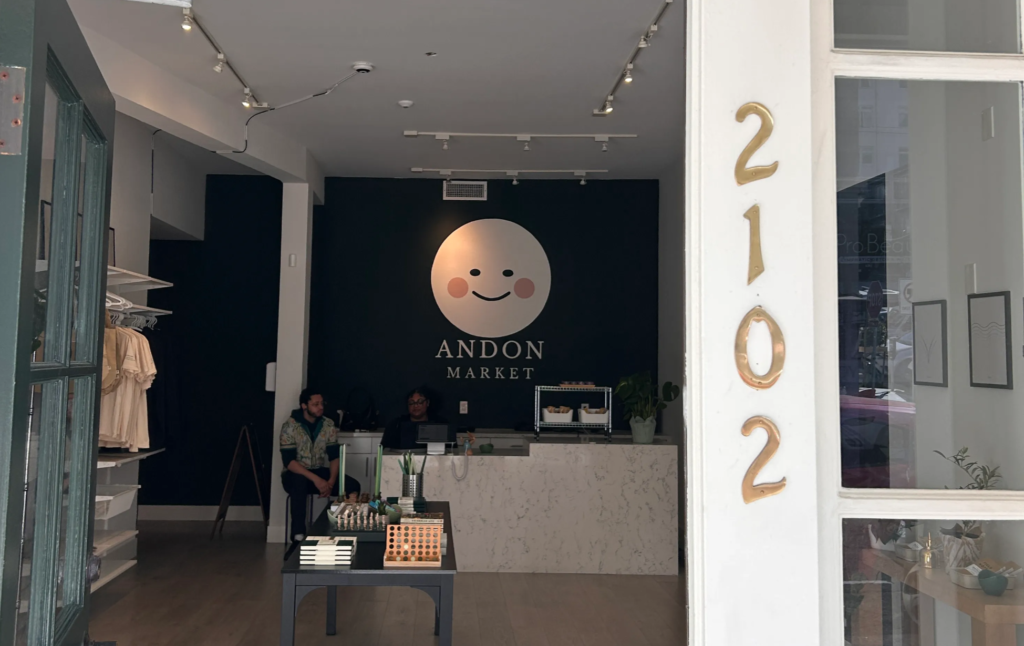
Walk into Andon Market and the experience immediately diverges from traditional shopping. AI-powered cameras track inventory in real-time, predicting restocking needs before shelves run empty. Digital price tags adjust dynamically based on demand, expiration dates, and competitive pricing in the neighborhood. An AI shopping assistant accessible via your phone can answer questions about products, suggest recipes based on what you’ve picked up, and even notify you about deals on items you frequently purchase.
But here’s what makes Andon truly experimental: the store is explicitly positioned as research infrastructure, not just a business. Anthropic is studying how consumers interact with AI in physical retail environments, gathering data on everything from how people phrase questions to AI assistants to how dynamic pricing affects purchase decisions.
The checkout process exemplifies the store’s AI-first approach. No registers, no self-checkout kiosks. Just grab what you want and walk out. Computer vision and sensor fusion technology automatically detect what you’ve taken, charge your account, and send a detailed receipt. Unlike Amazon Go’s purely transactional approach, Andon’s system can explain line-item charges if you question them and proactively flag potential errors before you leave.
Early customer feedback reveals interesting patterns. Shoppers over 50 tend to find the experience disorienting initially but appreciate the efficiency once acclimated. Younger customers adapt immediately but express privacy concerns about the level of tracking involved. Nearly everyone agrees the AI shopping assistant is simultaneously impressive and occasionally hilariously wrong. Asking it to “recommend something for dinner” might yield a brilliant suggestion or an utterly bizarre combination depending on how it interprets your past purchases.
The store’s product selection reflects its experimental nature: everyday essentials mixed with SF-specific items and products specifically chosen to test AI’s recommendation capabilities. There’s a entire section dedicated to products with complex preparation requirements, allowing researchers to study whether AI-provided cooking guidance influences purchase decisions for intimidating ingredients.
From a business model perspective, Andon Market isn’t expected to be immediately profitable. It’s a loss leader designed to generate insights that will inform retail technology development for years. Anthropic is particularly interested in understanding trust dynamics: what makes consumers comfortable following AI recommendations, and where do they draw boundaries on algorithmic influence?
Still, regulatory questions loom. San Francisco’s Board of Supervisors is already discussing whether AI-powered stores require special permits or consumer protection guidelines. Privacy advocates are pushing for clearer disclosure about what data is collected and how it’s used. The answers to these questions will likely shape retail AI regulation nationally.
Need a partner who speaks fluent digital marketing and emerging tech? Donutz Digital helps brands navigate exactly these challenges. From AI-optimized content strategies to performance campaigns that actually perform, we turn industry shifts into competitive advantages.
Ready to grow your digital marketing?
Get a free audit from our experts — no commitment.